

Introduction
Physical business spaces communicate before a staff member speaks or a product is introduced. Entrances, reception areas, walls, directories, displays, and lighting all influence how people interpret a brand. When these elements are planned together, signage can help turn a commercial environment into a more recognisable and meaningful experience.
Brand storytelling uses signage to express identity, values, personality, and purpose through the space itself. In retail stores, restaurants, offices, showrooms, and service environments, this approach helps connect practical information with a consistent visual narrative.
This article explains how businesses can use signage to shape that narrative across key customer and staff touchpoints.
Key Takeaways
- Signage can communicate a brand’s values and personality across multiple areas of a physical space.
- Consistent typography, colours, materials, lighting, and placement help create a connected visual narrative.
- Story-led signage can support recognition, customer engagement, navigation, and differentiation in competitive environments.
What Is Brand Storytelling Through Signage?
This approach uses coordinated visual elements to communicate what a business represents. Rather than relying on a single logo at the entrance, it considers how multiple signs work together throughout the customer journey.
Each sign can contribute a different part of the story. A storefront introduces the brand, a reception feature establishes the tone, wayfinding helps people navigate the environment, and interior displays can communicate values, heritage, services, or product meaning.
Functional Signage and Storytelling Signage
Functional signage focuses on information such as directions, room names, prices, safety instructions, and service details. Storytelling signage adds context and personality without weakening that clarity.
For example, a directional sign can use brand colours and custom icons, while a room identifier can incorporate materials associated with the company’s character. The message remains practical, but the presentation supports the wider narrative.
How Businesses Use Signage to Tell Their Story
Retail Spaces and Brand Journeys
Retail environments often use entrance graphics, feature walls, campaign panels, product category signs, and point-of-sale displays to guide customers through a sequence.
A consistent brand experience in retail spaces can help shoppers understand what the brand offers, which products deserve attention, and how different areas relate to one another.
F&B Environments That Express Personality
Restaurants, cafés, bars, and food halls can use menu boards, neon features, wall graphics, counter signs, and material finishes to shape mood and identity. Together, these touchpoints can create immersive customer environments that feel distinctive while still supporting ordering, circulation, and service.
Offices That Reflect Culture and Identity
Office signage can communicate more than department names. Reception logos, value statements, meeting-room graphics, milestone walls, and environmental graphics can help employees and visitors understand the organisation’s culture.
A coherent visual identity in interiors also supports continuity between external branding and the day-to-day workplace.
Showrooms and Experiential Spaces
Showrooms can arrange signage as a guided narrative. Introductory panels establish context, feature labels explain benefits, digital displays provide detail, and directional cues lead visitors through the intended sequence.
How to Create a Story Through Signage
Define the Brand Narrative
Businesses should first identify the values, tone, personality, and messages the space needs to communicate. A brand associated with craftsmanship may emphasise materials and process, while a technology business may focus on clarity, movement, and innovation.
Map Important Touchpoints
Entrances, reception areas, lift lobbies, corridors, service counters, product zones, meeting rooms, and payment points are common opportunities for signage.
Each touchpoint should have a clear role. Some signs introduce, some guide, some explain, and others create a focal point. Mapping these roles prevents unnecessary repetition.
Establish a Consistent Visual Language
Typography, colour, symbols, layout, materials, and lighting should work together. Consistency helps users recognise the brand across different signs and areas.
Create a Clear Hierarchy
A space usually needs a small number of focal elements supported by quieter informational signs. Too many competing feature pieces can make the environment feel crowded and weaken the main message.
Hero signage may include an illuminated logo, a custom wall installation, or neon signage. Supporting elements may include acrylic signage for room labels, directories, or product information.
Use Materials and Lighting Purposefully
Material and lighting choices affect how the story feels. Acrylic can create a clean, layered appearance, metal can suggest durability or refinement, and illuminated elements can add emphasis or atmosphere.
Maintain Consistency Across the Space
Signage should align with the interior architecture, customer journey, and other brand materials. Custom signage planned as a single system can reduce visual mismatches among entrances, feature areas, directories, and supporting signs.
How Signage Can Support Business Performance
Consistent brand storytelling can improve recognition by repeating distinctive visual cues throughout a space. Customers are more likely to remember an environment when its colours, typography, imagery, and materials work together.
Clear storytelling can improve the in-store experience by making the environment easier to understand. Customers can identify important areas, follow product journeys, and connect visual details with the brand’s purpose.
Common Mistakes in Brand Storytelling Through Signage
Inconsistent Visual Language
Using unrelated fonts, colours, materials, or icon styles can weaken the narrative. Even individually attractive signs may feel disconnected when they do not share common design principles.
Overdesign and Cluttered Messaging
Too many graphics, statements, materials, or illuminated features can compete for attention. Customers may struggle to understand which message matters most.
Weak Hierarchy
Without a clear focal point, every sign can appear equally important. This reduces impact and makes practical information harder to find.
Mismatch with the Interior
Signage that does not suit the architecture, finishes, lighting, or scale of the space can feel like an add-on rather than integrated.
Forced or Unclear Storytelling
Long statements and vague slogans may not communicate much. Stronger storytelling usually comes from specific visual choices, concise messages, and consistency across touchpoints.
Turning Business Spaces into Connected Brand Experiences
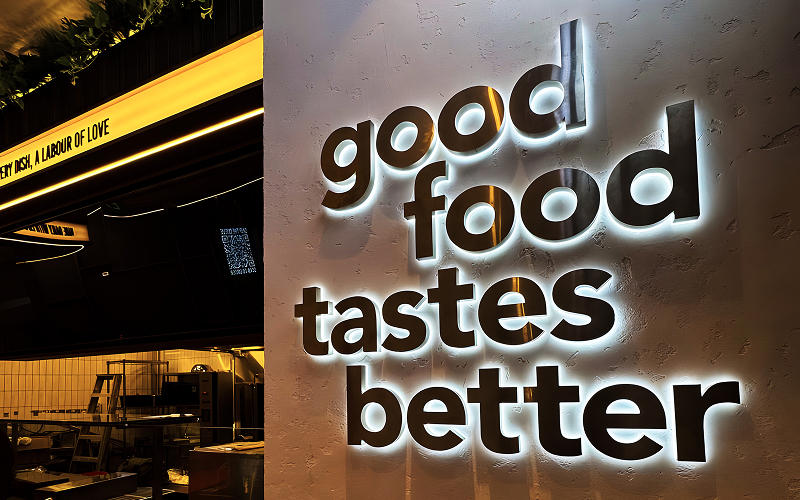
Brand storytelling works best when signage communicates clearly while supporting the environment’s atmosphere and identity. A connected system can help customers recognise the brand, understand the space, and engage with important touchpoints.
At Sui Generis Signage, signage can be developed as part of a broader spatial and branding plan. The team can support design development, material selection, local fabrication, lighting integration, digital elements, and installation planning across entrances, reception areas, directories, feature walls, retail displays, and other commercial touchpoints. This coordinated approach helps businesses maintain consistency while giving each sign a clear functional and narrative role.
For support in developing a signage system that communicates your brand story throughout a physical business space, please contact us.