

Key Takeaways
- Temporary closure signage should tell customers what is happening, how long it may last, and what they should do next.
- Physical signs, Google Business Profile, website notices, and social updates should carry the same message.
- Google recommends special hours for closures of seven days or less and temporarily closed status for longer closures.
- Visibility depends on placement as much as wording.
- Clear communication protects trust and encourages customers to return.
Why Clear Communication Matters During Temporary Closures
When customers reach your premises and find the doors shut, they fill in the gaps. Has the shop moved? Has the company ceased trading? Is the closure only for today? A clear sign answers those questions. A business temporarily closed for maintenance, renovation, or disruption should make that status obvious at the storefront.
We treat closure communication as part of the signage strategy for your company, not as an improvised sheet on a door. The message still represents your brand. Typography, contrast, hierarchy, and a professional finish show that downtime is planned and managed.
That matters in Singapore’s malls, shophouse districts, office clusters and neighbourhood retail areas, where customers can switch quickly. If online information says you are open while the storefront says otherwise, confidence drops. Your Google Business Profile, website, social channels, and physical sign should align.
What Google’s Temporary Closure Status Means for Your Visibility
Google distinguishes between brief closures and longer shutdowns. Special hours are generally intended for short closures, while the “Temporarily closed” status is used for longer or indefinite periods. Temporarily closed businesses may also appear after open businesses for broader searches, so the status can affect visibility.
Published testing provides context. In a 2022 WEB20 Ranker test, rankings and traffic fell after the temporary-closure flag and returned to previous levels more than a month after reopening. That result is not a Singapore benchmark or universal recovery timeline. Treat it as directional. For the first 30 days after reopening, monitor local-pack visibility, discovery searches, calls, direction requests, and website clicks against your pre-closure baseline.
What Information Closure Signage Should Include
A strong temporary closure sign design answers the customer’s questions in order. Start with a direct closure statement. Add a brief reason, such as renovation or maintenance. Then state the reopening date or a realistic timeframe. For a business temporarily closed without a confirmed reopening date, the sign should state when the next update will be provided.
Your sign should tell customers what they can do now. Can they shop online, contact your team, visit another outlet, collect an order elsewhere, or check your website? Keep choices focused. For renovation projects, check whether planned signage falls under local requirements, particularly in conserved areas covered by URA’s signage guidance for conservation areas.
Physical signage is one part of the customer journey, so carry the closure message online. For seven days or less, use special hours. For longer, seasonal, or uncertain closures, use the temporary closure status. When managing a business temporarily closed on Google, go to Edit profile, Hours, Edit, Temporarily closed, then Save. On reopening, change it to Open with main hours. Avoid unrelated profile changes while managing the closure.
Common Signage Formats Used for Temporary Closures
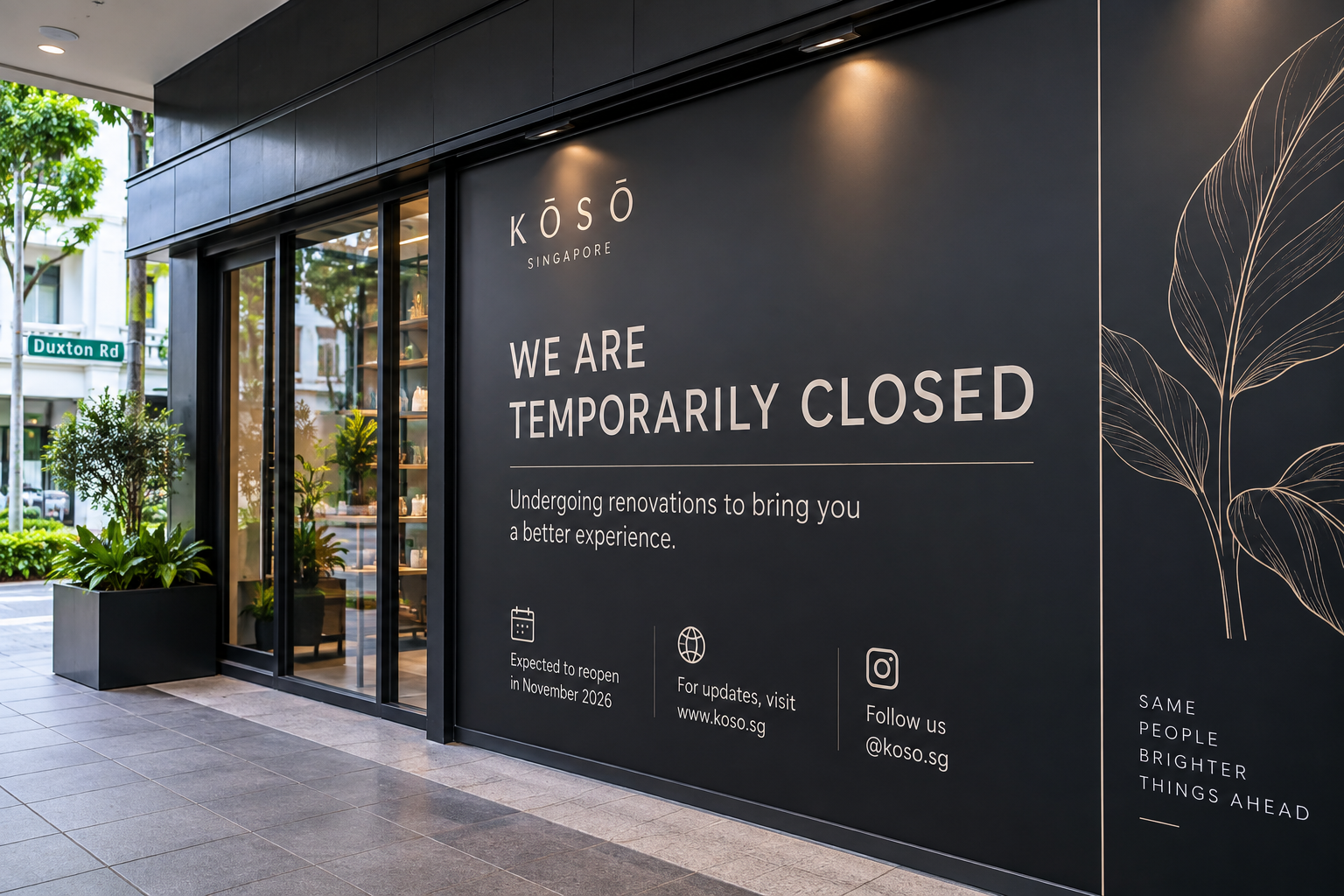
The right format depends on distance, duration, environment, and update frequency. A business closure notice can appear on a freestanding sign, printed panel, or storefront display during a short shutdown. Window decals work well where customers approach glazing. Freestanding boards can intercept pedestrian traffic before the entrance, while digital screens suit locations where details change frequently.
For larger shopfronts, hoardings, or multi-unit premises, large format printing gives you enough scale to communicate from a distance. During renovation, it can turn blank surfaces into branded information space. The objective is to make the closure message unmistakable while keeping the brand visible and credible.
Digital formats should support, not replace, what customers see on site. A business temporarily closed at its physical premises can still confuse customers if its Google Maps hours, website banner, social profile, or directory listing suggests normal operations. Prepare these updates together, then check them before reopening so the physical and digital experience changes in sync.
How Placement Affects Visibility
Even excellent wording fails when customers do not see it. We place the primary message where people naturally look, around eye level and clear of reflections, clutter, or barriers. For signage used during a renovation closure, visibility may need to work around hoarding, scaffolding, covered walkways, or temporary access routes.
In larger premises, one sign is rarely enough. Think through each arrival path: mall corridor, lift lobby, carpark connection, side entrance, pickup point, or shared lobby. Secondary signs can repeat the core message and redirect customers. Plan placement around actual customer movement rather than an idealised floor plan, so people can find essential closure information without extra effort.
How Clear Signage Supports Customer Trust
Customers are more accepting of downtime when they understand what is happening and what comes next. A calm message, credible timeframe, and clear alternative channel show that you have considered their inconvenience. This matters especially for a business temporarily closed for renovation, as repeat customers may have travelled to visit you or collect an order.
Trust also depends on consistency. Google can receive closure updates from sources beyond the owner, so if your profile is incorrectly marked closed, review the status promptly, mark the location open again where appropriate, confirm your hours, and contact Business Profile support if the issue persists. A storefront sign gives customers a reliable physical reference while online information is corrected.
Conclusion
A temporary shutdown is still a customer touchpoint. Before your next maintenance window, renovation, or operational pause, plan the message, format, placement, and digital updates together.
At Sui Generis Signage, we fabricate custom signage in Singapore with responsive turnaround and installation support for temporary closures.
Speak with us early to plan the right signage format and placement. We can help keep essential closure information clear and visible throughout downtime.